


Women and Burnout: Stop Praising Us for Surviving

Updated: Sep 14
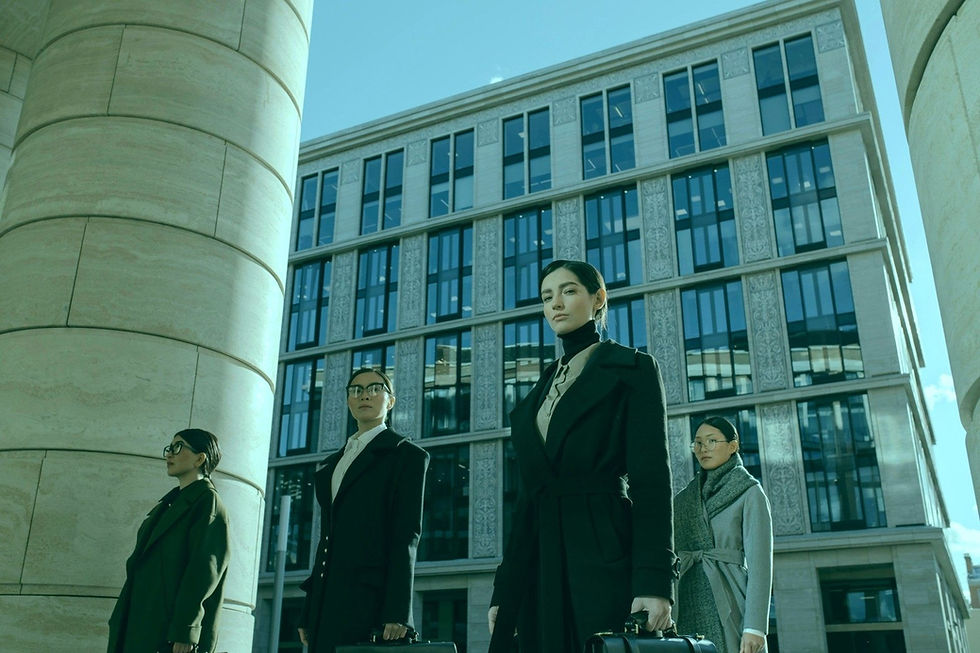
Women and burnout are rarely spoken about in the same breath as systemic failure. Yet why do we keep applauding women for surviving? Why do we keep praising them for handling too much, for holding it all together, for pretending everything is fine?
Survival should never be the standard, nor the goal. Yet everywhere we look, women are expected to endure, to adapt, to ‘absorb’ more than anyone else would; and the world claps. Strength has become a requirement: long hours, emotional labor and endless responsibilities. Women take it all on and when the system fails, no one notices. The message is clear: “You can handle this.” However, what no one says out loud is: “Even if it breaks you.”
The Hidden Cost of Strength
Everyone celebrates the “strong woman” who never asks for help. Sounds inspiring, right? Except it isn’t. Being “strong” often means you cannot show struggle, complain, or admit weakness. Endurance becomes mandatory. It isn’t a choice anymore. Research proves this expectation hurts mental health. Burnout and anxiety are framed as personal failings rather than natural reactions to impossible conditions (Psychology Times).
The Innovation of Self-Permission
In the world of professional innovation, we are taught to optimize every system except our own lives. We iterate on products, disrupt industries, yet we treat our own endurance as a fixed, non-negotiable resource. This is the ultimate irony of the “strong woman” narrative: we are praised for being reliable machines in a world that demands constant creativity.
However, true innovation requires mental space to think, dream, and fail. When a woman is locked in a cycle of pure survival, her capacity for high-level innovation is stifled. We cannot disrupt an industry if we are too exhausted to disrupt our own schedules. Reclaiming authority means moving from a state of “functional depletion” to one of “strategic agency.” It requires the radical innovation of self-permission, the permission to stop being the shock absorber for everyone else’s systemic failures.
Resilience Isn’t a Superpower
Resilience is not magic. It exists because women are expected to deal with systems stacked against them. Research shows mainstream definitions often ignore structural barriers and gendered realities (JSBS Scholastica). Women cope because they have to, not because they chose to.
Corporate life is stacked against women. Bias affects pay, promotions, and access to capital. When women succeed, society applauds grit instead of questioning why obstacles exist. Resilience is celebrated while injustice remains invisible.
At home, women perform most unpaid labor. The UN reports they do over 75 percent of global unpaid care work (International Labour Organization). Society expects women to balance everything perfectly, with resilience is treated as mandatory rather than a natural response to unfair circumstances.
Entrepreneurs face the same fight. Women receive less than a third of venture capital (GEM Report 2023). And we applaud their grit instead of asking why the system is rigged.

Survival Hides Inequity
Women’s resilience is celebrated in history and culture, but context is erased. Race, gender, and class matter. Traditional definitions of resilience often ignore this, turning survival into personal triumph instead of a response to systemic inequality (ScienceDirect).
Think about COVID-19. Women were on the frontlines as health workers, educators, caregivers. Policies rarely addressed the inequities they faced (ScienceDirect). Adaptability was praised, but systemic support was invisible.
Praising women for surviving shifts responsibility from broken systems to individuals. Intersectionality makes this worse. Women of color, disabled women, LGBTQ+ women face multiple barriers, yet the narrative treats all women the same, which erases the reality of unequal struggle.
Disrupting the “Resilience” Industry
We must also look at how the “resilience industry” has become a tool for maintaining the status quo. Corporate wellness programs often focus on teaching women how to breathe through burnout rather than addressing the structural inequities that cause it. This is not support; it is a diversion. It places the burden of “fixing” the problem back onto the person being crushed by it.
Innovation in leadership means moving beyond these band-aid solutions. It means designing environments where a woman’s success isn’t measured by how much she can endure, but by the quality of her contribution. When we stop romanticizing the struggle, we clear the path for genuine leadership. We shift the focus from “How can she handle more?” to “How can we build better?” This shift is where real progress lives, not in the grit of the individual, but in the integrity of the collective.
Rethink Strength
Strength should be a choice, not a requirement. Endurance should not be the standard. Exhaustion is inevitable when society expects women to persist without support. Real change comes from removing barriers, not demanding women survive them. Support must exist before crises appear: affordable childcare, equitable pay, flexible workplaces, healthcare, and real networks of help. What should be celebrated is collaboration, empathy, and shared effort, not just the ability to carry impossible burdens alone.
We are not here to survive a broken system. They are here to demand better, to tear down barriers, and to insist that fairness becomes the standard. It is time to make the world bend to justice, not to bend ourselves to survive.

Women and Burnout: From Endurance to Authority
The transition from surviving to thriving is not a quiet one. It is a loud, intentional reclamation of one’s own will. Women’s mentors and life coaches, I see this transformation daily: women who have spent decades being “the strong one” finally deciding that their own peace is more important than their reputation for being tireless.
We are not here to be the silent backbone of broken institutions. We are here to be the architects of new ones. By refusing to accept survival as our standard, we force the world to innovate. We demand systems that value our humanity as much as our productivity. It is time to stop being proud of how much we can carry and start being proud of how much we are willing to change.
Originally Published: THE GAL PROJECT
Frequently Asked Questions
What are the signs of burnout in women?
Common signs of burnout in women include chronic exhaustion, emotional overwhelm, irritability, difficulty concentrating, loss of motivation, sleep disturbances, and feeling disconnected from work or personal life. Burnout often develops gradually when stress becomes a constant state rather than a temporary challenge.
Why are women more vulnerable to burnout?
Women often face a combination of professional responsibilities, caregiving duties, emotional labor, and societal expectations. Research shows that women perform a disproportionate share of unpaid care work while also navigating workplace barriers, making them more susceptible to burnout and chronic stress.
Is resilience the solution to burnout?
Not always. While resilience can help people cope with challenges, it should not be used to justify unhealthy workloads or unequal expectations. Burnout is often rooted in systemic issues such as workplace culture, lack of support, and gender inequality. Sustainable change requires both personal boundaries and structural improvements.
What coaching support is available for women experiencing burnout?
If you feel emotionally exhausted, overwhelmed, constantly responsible for everyone else, or trapped in survival mode, the BURNOUT FIX Coaching Space for Women by Expert on Your Life is designed specifically for women navigating burnout and chronic overwhelm. Rather than teaching women how to tolerate more pressure, the focus is on creating sustainable change, emotional clarity, and a way of living that no longer depends on exhaustion as the price of success.
Written by Betty Chatzipli
Betty is an experienced mentor and Women’s Empowerment Coach with a multifaceted background in Art History, Business Development, and PR. She is the Founder & CEO of Expert on Your Life, where she offers one-on-one coaching and designs transformative programs that help women build essential skills. She also runs The Rise of She, where she writes extensively on women’s empowerment, focusing on personal growth and resilience. Contact: lifecoach@expertonyourlife.com
Disclaimer
The content of this webpage is not intended to be a substitute for professional medical advice, diagnosis, or treatment. Expert on Your Life, OÜ. is not affiliated, associated, endorsed by, or in any way officially connected with the references and information cited on this webpage. Read our full Disclaimer here.
Sign up at expertonyourlife.com to receive our newsletter and to have access to our PowerKit for more actionable ideas and resources. Find professional support and guidance on your journey to building psychological strength by booking one of the coaching sessions below.


Comments